
After a storm like Lala rolls through, Hawaii splits into two groups: the families whose damage is on the news, and everyone else. If you’re in the second group — a few shingles in the yard, a water stain that showed up on the ceiling, some rain that blew in around the windows — you’ve probably already told yourself the story: “We got lucky. It’s nothing compared to what other people are dealing with. Not worth a claim.”
That story feels humble and sensible. It is also, in our experience as Hawaii public adjusters, one of the most expensive sentences a property owner can say — because it decides the outcome of a claim before anyone has actually looked at the damage. This guide is for the “we got lucky” group. Not to talk you into filing a claim you don’t need, but to help you make that decision the way a professional would: with evidence, with your actual policy language, and with a clear picture of what your “minor” damage really is.
“Minor” Is a Diagnosis, Not a First Impression
Here’s the core problem: storm damage is judged by untrained eyes at exactly the moment it’s hardest to see. Wind and water damage don’t announce themselves. They start small, spread quietly, and surface weeks or months later — usually after the connection to the storm has faded from everyone’s memory except your insurance company’s.
Take the three most common “it’s nothing” scenarios we hear after every Hawaii storm:
- “Just a few blown shingles.” Shingles don’t leave one at a time for no reason. Wind strong enough to remove some has usually lifted, creased, or broken the seal on many more — damage that’s invisible from the ground but leaves the whole roof system compromised for the next storm. And every gap that opened, even briefly, was an entry point for wind-driven rain.
- “Just a small leak.” A ceiling stain the size of a dinner plate can be the bottom of a much larger problem: soaked insulation, wet framing, and moisture spreading laterally through the ceiling and down inside walls. In Hawaii’s humidity, wet building materials don’t dry politely on their own — they grow things.
- “Some rain blew in through the windows.” If wind created the opening or drove rain past seals, the water that hit your floors, walls, and furniture is typically part of a covered wind event — and water that ran under flooring or into wall cavities keeps doing damage long after the towels are in the dryer.
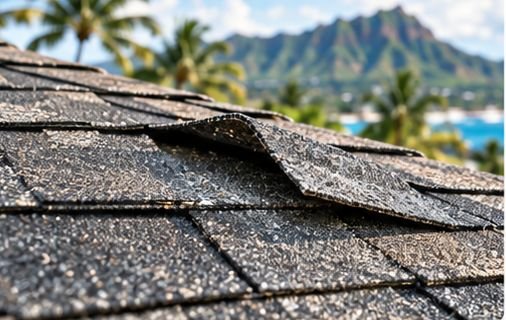
Just a few blown shingles
The shingles that stayed may be damaged too — lifted, creased, or unsealed.
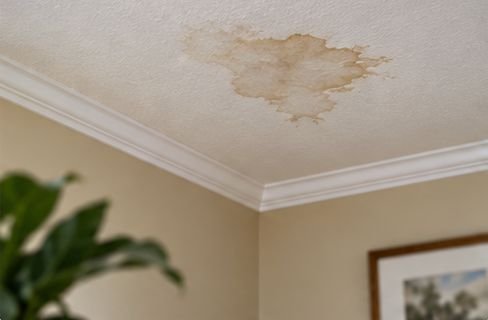
Just a small leak
A small stain can be the bottom of a much larger wet area above it.
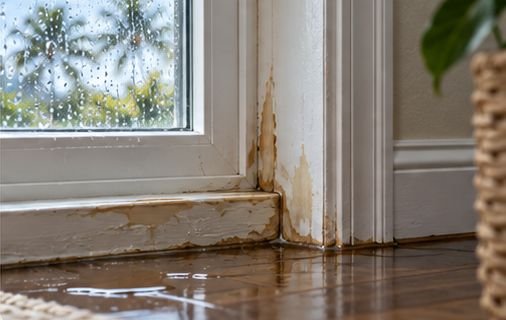
Rain blew in through the windows
Water can keep traveling long after the storm ends.
The Damage Iceberg
Adjusters have a mental model for storm losses that most property owners don’t: the part you can see is rarely the whole loss. What’s visible from the driveway is the tip. What determines the true size of the claim lives below the waterline — and it only gets counted if someone trained goes looking for it.
What you can see is often only the tip.

Only layers 1 and 5 are ever visible without a real inspection — and rushed carrier inspections often price only what they can see.
Ask Yourself These Questions
You don’t need training to start thinking like an adjuster — you need the right questions. Walk your property with these in mind. Every “yes” or “I’m not sure” is a reason to get a professional set of eyes on it before you decide anything:
- Did anything leave your roof — even one shingle, cap, or piece of flashing?Whatever left is the damage you can see. The question is what the same wind did to everything that stayed.
- Did water show up anywhere it doesn’t belong — ceilings, window sills, walls, floors, lanai?Where water appears is almost never where it entered, and never the only place it went.
- Did rain blow in around windows, doors, or vents during the storm?Wind-driven rain through wind-affected openings is typically part of a covered wind event — including what it did to walls, flooring, and furniture.
- Have you noticed new stains, bubbling paint, swollen baseboards, musty smells, or doors that suddenly stick?These are the classic late signals of moisture already inside the structure.
- Did your power go out long enough to lose refrigerated or frozen food?Many Hawaii policies include food spoilage coverage most owners never use. Photograph before you toss.
- Does your fence, gate, carport, solar array, screen, or outbuilding look even slightly different than before?Other structures are typically covered too — and “slightly leaning” is damage.
- Did your business close, slow down, or lose inventory — even for a day or two?Business interruption and spoilage coverage can respond to exactly this. Closure records and sales history are your evidence.
- Are you comparing your damage to your neighbor’s instead of to your own policy?Your coverage doesn’t care how bad anyone else’s loss was. Only yours.
- Have you already repaired or cleaned things without photographing them first?Stop and document everything that remains — today, before the next repair.
- Do you actually know what your policy covers — hurricane vs. homeowners, your deductible, code upgrade coverage, matching, spoilage?If you can’t answer confidently, you’re deciding whether to claim money you can’t even name.
Before You Clean It All Up Yourself
Here’s the uncomfortable truth about the DIY instinct: when you quietly repair storm damage at your own expense, you are doing the insurance company’s job for free. You paid premiums — possibly for decades — precisely so that storm damage would be their cost, not yours. Absorbing it yourself isn’t noble; it’s an unclaimed benefit.
To be clear: your policy does require you to take reasonable steps to prevent further damage — tarping an opening, drying wet areas, moving belongings out of harm’s way. Do those things. The trap isn’t mitigation; it’s undocumented mitigation and premature permanent repairs:
- Photograph and video everything first — wide shots, close-ups, every room and elevation, even areas that look fine. You cannot over-document.
- Keep what breaks. Blown shingles, the failed flashing, water-stained materials — physical evidence is persuasive in a way photos alone are not.
- Save every receipt for tarps, fans, dehumidifiers, and emergency work — reasonable mitigation costs are typically reimbursable parts of a claim.
- Hold off on permanent repairs until the damage has been properly assessed. A repaired roof can’t be inspected.
Document in four passes — before anything moves

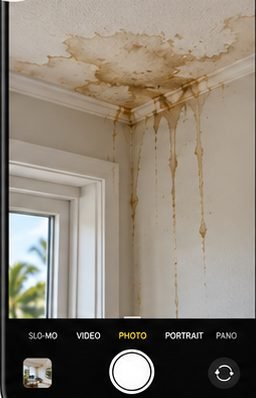
1 · Wide
Photograph the whole room, elevation, or roof area.
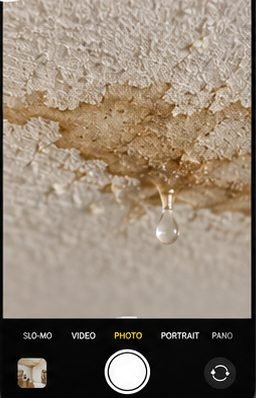
2 · Medium
Show where the damage sits in context.
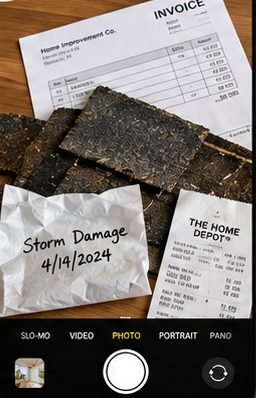
3 · Close-up
Capture the actual stain, crack, shingle, or wet material.
4 · Evidence
Keep damaged pieces, receipts, invoices, and emergency-mitigation records.
You cannot over-document storm damage.
“But I Called My Agent, and They Said Don’t Bother”
This may be the single most common way legitimate Hawaii claims die. So let’s be precise about what actually happened on that phone call: a salesperson who has never seen your property, doesn’t adjust claims, and doesn’t decide coverage gave you an off-the-cuff opinion — and you treated it as a claim denial. It wasn’t one. Coverage is decided by your policy language applied to properly documented damage, not by anyone’s phone manner.
The premium question deserves a straight answer too: yes, claims history can affect future premiums and renewals — anyone who tells you otherwise isn’t being straight with you. But that’s an argument for making the decision with real numbers, not for skipping the assessment. There’s a world of difference between “I didn’t file because the damage turned out to be $900 and my hurricane deductible is $5,000” and “I didn’t file because it looked small from the driveway.” The first is an informed decision. The second is a donation.
The Coverage You’re Already Paying For
Most owners judge “worth claiming” against a mental picture of their coverage that is far smaller than the real thing. A few provisions that routinely surprise Hawaii policyholders:
Many policies eventually pay what it costs to replace damaged items new — if you claim and follow through.
The holdback insurers keep until repairs are done and documented. Many owners never collect it.
When repairs must meet current building code, that added cost may be covered — a big deal in older island homes.
When discontinued roofing or flooring can’t be patched to match, the covered scope may be far larger than the damaged patch.
If damage makes your home genuinely unlivable during repairs, temporary housing costs may be covered.
Many Hawaii policies include a modest spoilage benefit for outage losses — photograph before you toss.
Hauling away what the storm left behind is often part of the covered loss, within policy limits.
Fences, gates, carports, and outbuildings typically have their own coverage — and “slightly leaning” is damage.
Not every policy includes every provision, and limits and conditions vary — which is exactly why the reading matters.
What a Real Assessment Looks Like
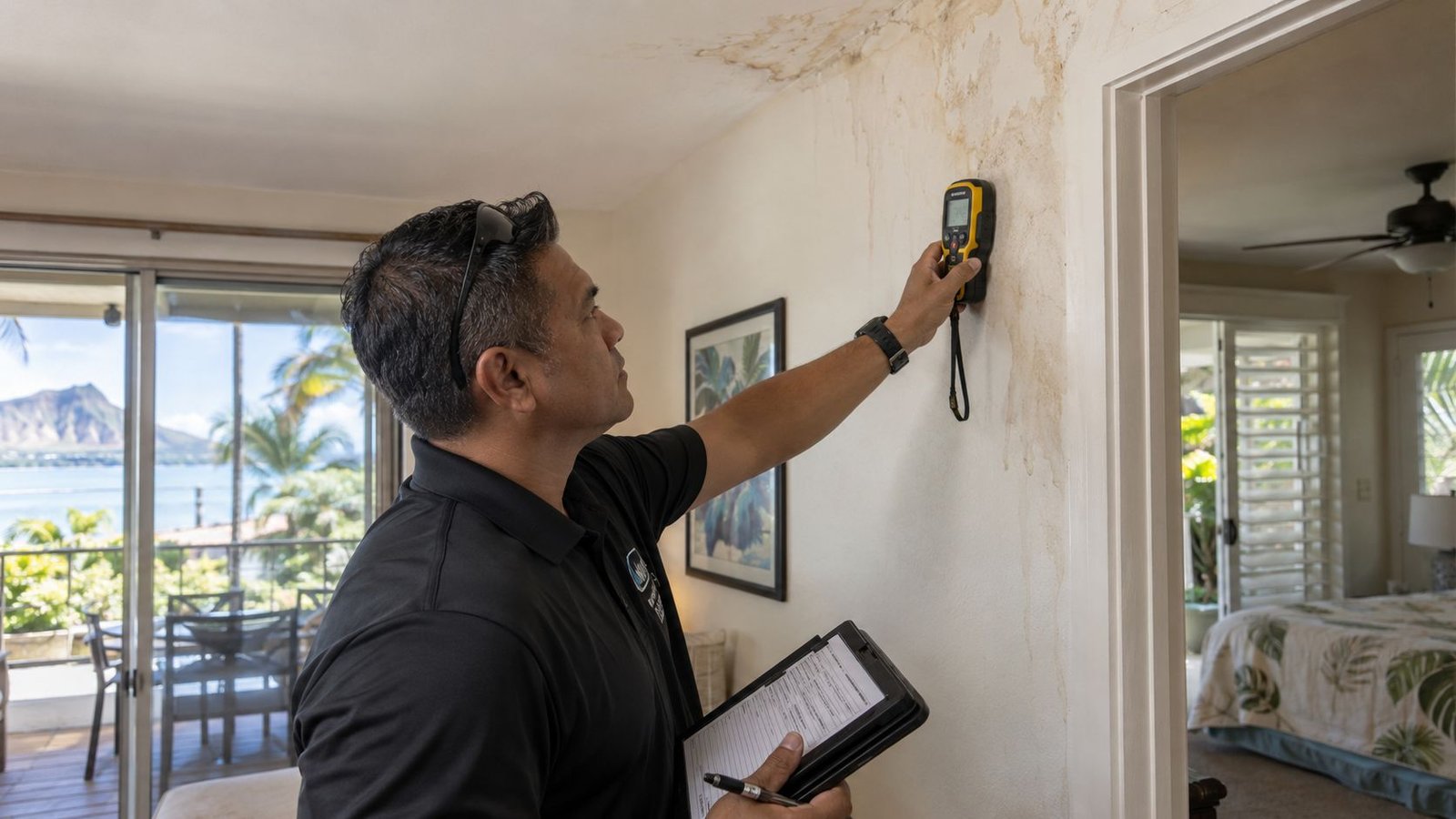
A proper post-storm assessment is nothing like a glance from the driveway — or, frankly, like some rushed carrier inspections after catastrophe events. It means getting on the roof and checking seals, fasteners, and flashing individually; moisture-metering walls, ceilings, and floors around every intrusion point; checking the attic; documenting every elevation and room photographically; and mapping what’s found against your specific policy’s language — hurricane vs. homeowners, deductibles, and the provisions above. That’s the evidence that turns “it’s probably nothing” into a real answer — and if a claim is warranted, it’s the documentation that gets it paid properly instead of nibbled down.
Your Path From Here
You don’t have to choose between filing blind and doing nothing. There’s a smarter sequence, and it costs you nothing to follow:
The Clock Is Quietly Running
Policies require prompt notice of loss, set deadlines for proof of loss and supplemental claims, and put time limits on recovering withheld depreciation. Meanwhile hidden moisture keeps working, Hawaii humidity keeps feeding it, and memories — yours, your neighbors’, the weather’s paper trail — keep fading. None of this means panic. It means the “wait and see” strategy has a real cost, and the assessment that settles the question is Complimentary.
Not Sure Your Damage Is “Enough”? That’s Exactly What the Review Is For.
Send us photos of what you’ve got — even if you think it’s nothing. Our licensed Hawaii team will assess it against your actual policy, respond with an honest review, and schedule a call to talk through your next steps. If it’s truly minor, we’ll tell you exactly that.
Start Your Complimentary ReviewNo cost · no obligation · no pressure to file · or email photos to aloha@island.claims